
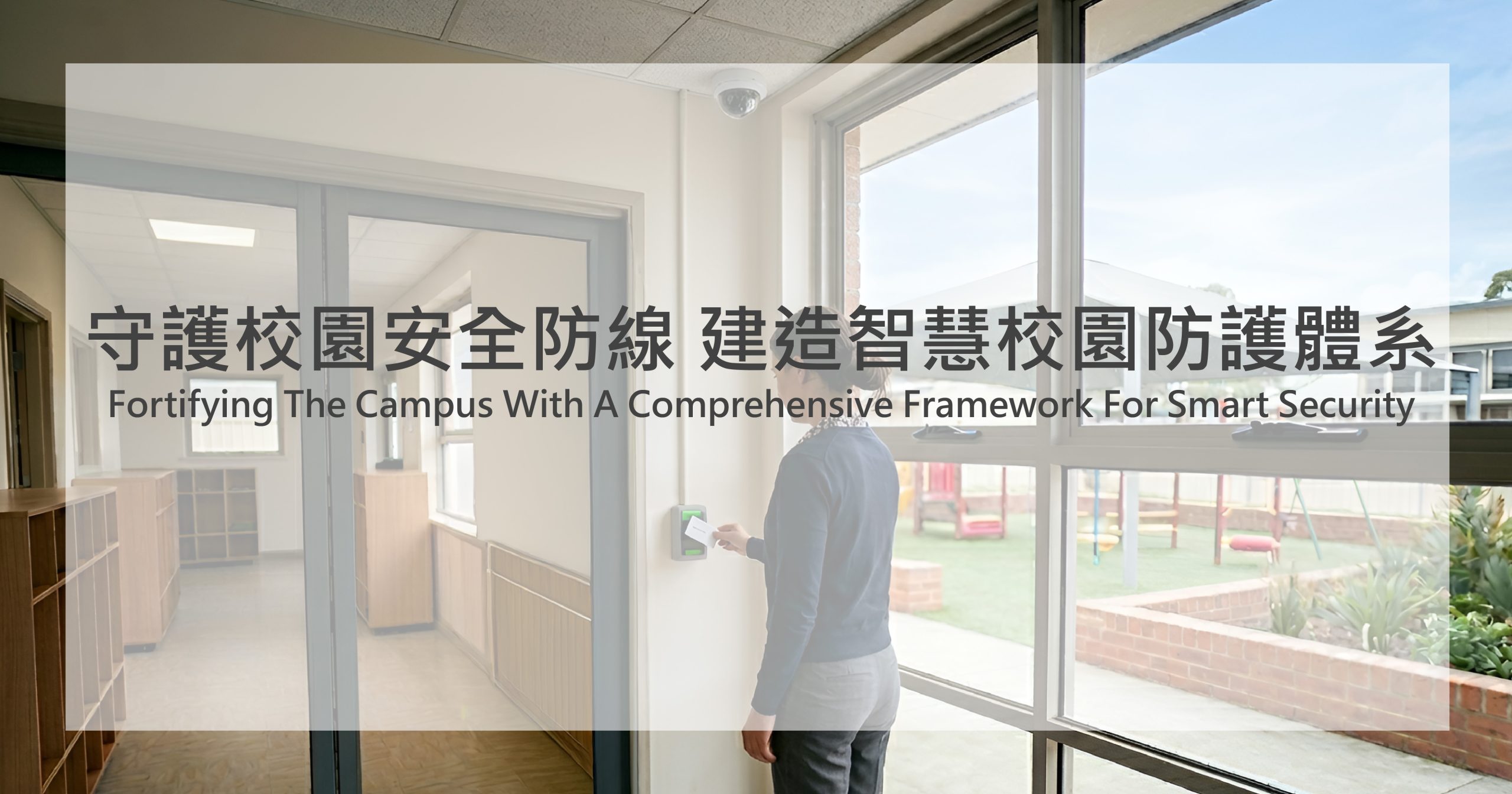
Campuses are meant to be pure environments where students acquire knowledge and nurture their minds. However, in recent years, incidents such as sexual assault, bullying, violence and even suicide attempts driven by stress have repeatedly challenged the safety boundaries of educational institutions. These incidents not only disrupt the tranquility of the learning environment but also raise serious concerns among parents, educators and society. How to leverage technology to build a proactive “prevention-first”, while balancing limited resources and privacy concerns, has become a core competency for modern campus management.
Proactive Protection by Smart CCTV
Blind spots on campus – such as secluded staircases, storage rooms and campus perimeters – are often breeding grounds for bullying and unlawful activities. Nowadays, CCTV systems have evolved far beyond simple video recording. With AI-powered video analytics, campus can monitor in real time and proactively detect abnormal behavior.
Take an example, if prolonged loitering near rooftop railings or intense physical conflicts are detected, the system can automatically trigger alerts to the control center. This proactive approach reduces impulsive violent incidents and provides high-resolution, infrared-enabled video evidence when incidents occur, helping to reconstruct events accurately and minimize disputes. In a recent case at a well-known local school, a campus fight was exposed through CCTV footage, which became key evidence in confirming student misconduct. The incident sparked parental concerns about campus’s disciplinary handling and monitoring mechanisms. This case highlights the critical role of security systems in incident reconstruction. With more smart CCTV deployed in key areas, abnormal aggressive behavior could have been detected earlier, allowing staff to intervene promptly and quell the conflict before it escalated.
Multi-Layered Access Control for Campus Security
CCTV is insufficient to prevent incidents such as sexual assault. Campus must implement access control systems to safeguard students. By deploying RFID smart card, Facial Recognition and QR code-based mobile authentication across teaching areas, laboratories, and restricted spaces, access rights can be effectively managed. Past cases have shown that many incidents occur when unauthorized individuals gain access to student activity areas or secluded spaces. Smart Access Control Systems can effectively restrict external intruders and maintain detailed entry and exit records of staff, ensuring that only authorized personnel can access sensitive areas.
RFID smart card enable quick and convenient authentication, making teachers and staff ideal for high-frequency access points such as classroom, academic buildings, and staff-only entrances. Lost cards can be immediately deactivated via the system backend to maintain security. Facial Recognition provides contactless authentication and can be integrated with access logs for traceability, making them suitable for high-security areas such as laboratories, storage rooms and IT server rooms. QR code-based mobile authentication allows dynamic permission management through mobile applications. Access rights can be created, updated, or revoked in real time, making it ideal for visitor registration areas, meeting rooms and parent pick-up zones.
Balancing Technology and Human Care from Visibility to Responsiveness
While CCTV and Access Control Systems significantly reduce campus risks, technology remains only a supporting tool. After deploying such systems, campus should not stop at hardware implementation, teachers and staff must establish transparent security governance and communication mechanisms to explain clearly to students and parents that these systems are designed for “Protection, not surveillance.”
This includes defining access privileges, data retention periods, access logs, incident reporting procedures, and assigning authorized personnel for system management. These measures ensure that data is not misused and that “Protection, not surveillance” becomes a trusted and transparent practice rather than a slogan. Facing increasingly complex campus security challenges, single-layer defense mechanisms are no longer effective. Campus safety is an ongoing mission. When technology grants us the ability to foresee risks, its value lies not just in “being seen,” but in how we “respond.” Only through this integration can we ensure that hidden campus incidents have nowhere to hide.
If you are interested in above products and services, please contact us via email at enquiry@ensecsolutions.com or call (852) 2343 6884 for more product details.